How to Stop Your Cat From Jumping on the Kitchen Worktop
Why do cats jump on to high spaces and kitchen worktops?
Domesticated cats love being in high places, such as the top of bookcases, kitchen units and bedroom wardrobes, because they are descendants of the Proailurus (the first ‘real’ cat). These cats were tree climbing hunters who lived in the rainforest, and would climb up trees so that they could keep an eye on the world beneath them, therefore boosting their confidence and naturally helping them assert dominance. Tree climbing also offered immense survival value, therefore becoming hardwired in their instincts.
So, if you want your cat to stop climbing all over your kitchen worktop, then you need to make sure they have enough space (both high and low) to do this. This can be done by purchasing you a few cat climbing polls, a cat shelf or clearing off some space at the top of your bookcase, However, this isn’t the answer to your problem – it’s the first of many steps to getting your cat to stop parading all over the surfaces where you prepare food.

3 ways to stop my cat from climbing on the kitchen counters
So, how do you regain dominance of your kitchen and get your cat to stop walking on kitchen worktop like it’s their own personal runway? Follow these three tips, and you’ll have jurisdiction in no time.
1. Don’t leave food lying around the kitchen worktops and keep them clean
Whether you’re a cat, dog, human or insect, food left out on the side is tempting for every living being on the planet. If you want to stop your cat(s) from sissying that walk on the worktops, then keep counters them clear of human and cat food. Both will tempt them, and can you blame them? Your furry meow pal has a very powerful sense of smell, and food particles and spills left on countertops will lure them in. So, wipe down the worktops regularly with lemon scented cleaning products (cats hate lemon) and keep your kitchen units and kitchen cupboard doors clean. If you have to store food on your kitchen counter, the put them in cat proof containers that they can’t get into.
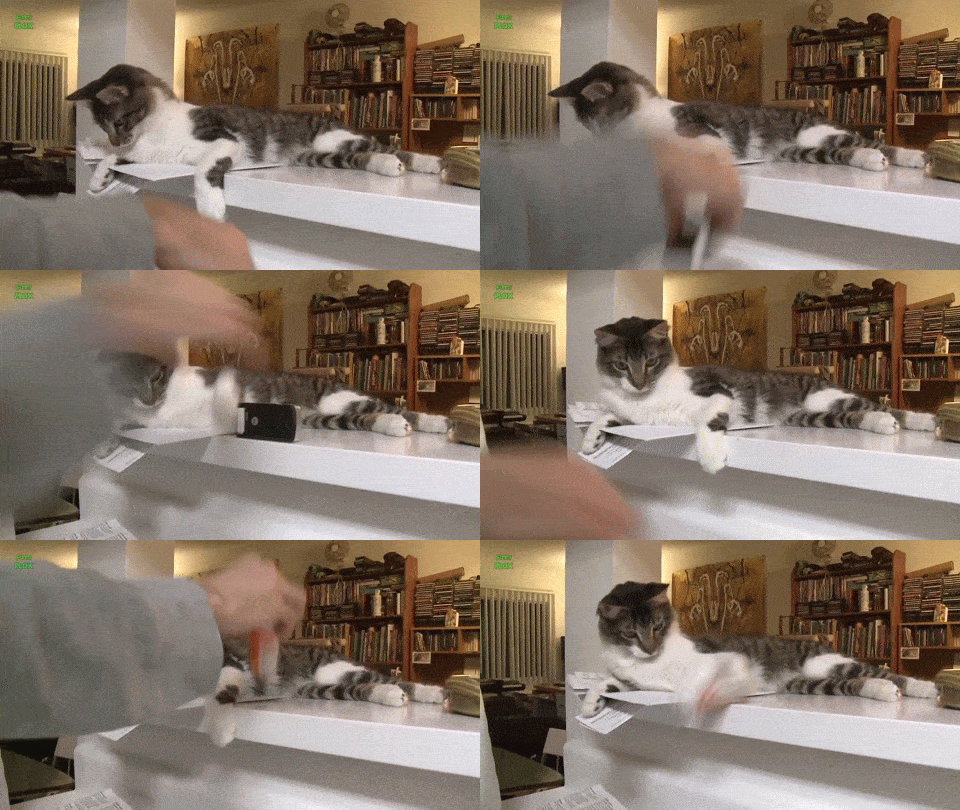
2. Put vertical cat furniture and cat shelves near windows
Cats like to watch the outside world – think about it, how many times have you walked past a window and seen a cat staring at you as it plans to take over the world? The experts say that cats like positioning themselves by the window so that they can survey their surroundings and satisfy their curiosity, and when you place some vertical cat furniture or a shelf there, they can climb and judge every living being on the outside of the window pane, making it less likely that they’ll jump over the kitchen counters. It’s a win-win situation.
3. Give your cat enough to play with and do inside your home
Cats, like small children, have a lot of energy that needs to be burnt off. If you give your cat lots of toys (that are placed on the floor in every room BUT the kitchen) then they’ll not only use their energy up whilst playing with the toys – it will keep them interested in that, instead of what’s on the kitchen worktops. You could get some of the following toys:
- Small, fake mice that can be thrown across the room, leading to a complex and intense game of cat and mouse. These inexpensive toys lead to hours of fun.
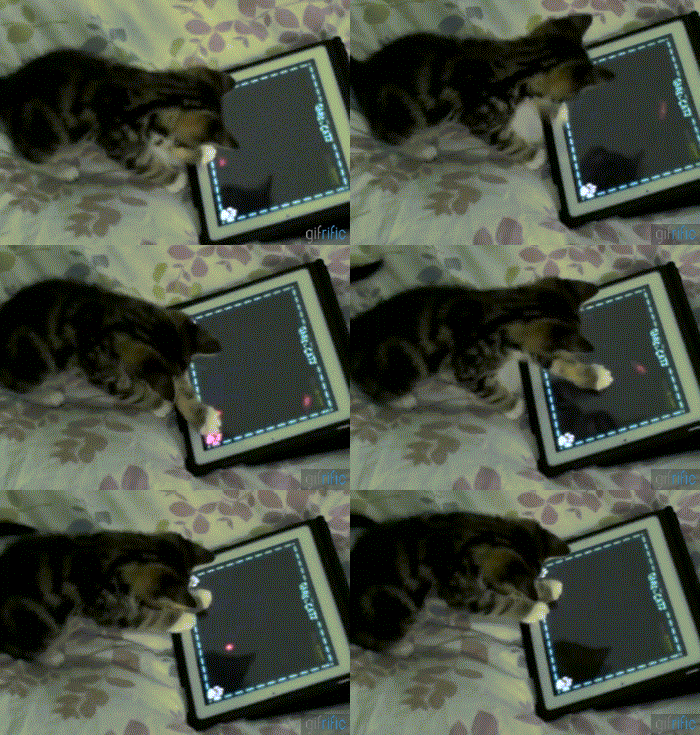
- Electronic toys that provide hours of entertainment with minimal input from humans. Toy mice that running around a track is a great one, or toys where their arch nemesis has wheels, allowing them to roll across the floors on their own are excellent. Electronic toys can be stimulating for cats, causing them to lose interest in kitchen surfaces. But they can also be expensive, and your cat probably knows this and therefore shows minimal interest.
Remember, you’ll have to try a few cat toys in order to find out which ones work.
What you should avoid doing to keep your cat off the worktop
As a cat owner, you chose to bring your furry friend into your home, and should therefore treat them with the respect and love they deserve (we’ve established that cats are an enigma, and there will only be a few times they reciprocate the feeling). If you’re desperate to stop them in the kitchen, you need to find a way to stop them without scaring them or raising their stress levels. This will only have a negative influence on your relationship.
Spraying the cat with water every time they go on the worktop
Squirting or spraying cats is known as a negative reinforcement technique, and whilst some cat owners swear by it, the principle of this punishment isn’t great. Think about it – you, the cat owner, should always be on guard and ready to squirt your cat with water whenever they set foot on the worktop. This means that in terms of consistency, you’re just telling the cat to stay away from the worktop when you’re at home. They’ll also associate you with punishment as you cannot hide and squirt them all the time – they’ll see you do it. You will also be at risk of stressing them out and making them frightened of water.
Can shaking or using compressed air spray
Can-shaking or using a compressed air can is another well known technique to stop cats from doing things owners don’t like, and it isn’t a very nice one. The idea is that owners fill an empty can with some coins in it, or even a compressed air can, and then shakes it to make a loud, disturbing noise every time the cat is on the counter. Similarly to water spraying, you, the cat’s owner, will become the source of this noise, and it will enhance the cat’s stress-levels.
Have you got any tips on how you stop your cat from climbing all over the kitchen worktop? Get in touch with The Lark and share them!
Feeling inspired?
Book your free, no obligation, design consultation with one of our experts.

5 Inspiring UK Kitchen Renovators to Follow in 2025
Thinking of updating your kitchen this year? Whether you're planning a full remodel or just want some fresh ideas, these five UK-based kitchen influencers are transforming homes one cabinet at a time. Follow their journeys for DIY inspiration, clever layouts, and plenty of design-savvy advice.
Why Off-White Kitchens Are the Timeless Choice for Modern British Homes
Cats. You give them shelter, food and affection which leads them to the conclusion that they are in fact Gods, and we are their loyal servants who sho...

How to Buy a DIY Kitchen from Lark & Larks (Without the Showroom Price Tag)
Cats. You give them shelter, food and affection which leads them to the conclusion that they are in fact Gods, and we are their loyal servants who sho...
Next Steps

Get Inspired

Quick Advice Session

Book a Free Design Consultation
Contact us
0330 135 9090 [email protected]Don't miss out on kitchen inspiration
Sign up for the latest trends, inspiration and DIY hacks delivered to your email inbox.
Products
Help
About us
Kitchens & Bedrooms by Colour